Heritage Conservation
Restoring Japan's Architectural Heritage
Safeguarding centuries of living tradition through skilled hands, authentic materials, and deep cultural knowledge
Safeguarding centuries of living tradition through skilled hands, authentic materials, and deep cultural knowledge
The Challenge
Japan is facing a crisis of architectural heritage. Across the country, thousands of historic minka farmhouses, machiya townhouses, and samurai residences stand vacant or in severe disrepair. Demographic change, rural depopulation, and the perceived impracticality of traditional buildings have pushed many of Japan's most extraordinary structures to the brink of demolition.
Yet these buildings represent an irreplaceable repository of knowledge — not just aesthetic beauty, but embedded intelligence about construction, climate response, material use, and social organisation. Once demolished, this knowledge is gone. Restoration is not nostalgia; it is the preservation of solutions that took centuries to develop.
The good news is that interest in traditional Japanese buildings — both from domestic and international buyers, and from Japan's growing preservation community — has never been higher. The machiya revival in Kyoto, the akiya (empty house) movement in rural areas, and the emergence of craft-focused restoration firms are creating a new ecosystem of support for Japan's traditional built environment.
Ageing structure: Many buildings are over 150 years old, with deteriorated foundations, roof systems, and structural timber.
Craft shortage: Traditional craftsmen are ageing out of the trade faster than apprentices can be trained.
Building codes: Post-war seismic standards require engineering solutions compatible with traditional methods.
Cost: Authentic restoration using traditional materials is significantly more expensive than conventional renovation.
Material sourcing: Traditional materials such as specific timber species, handmade tiles, and artisan plaster are increasingly rare.
Methodology
Our restoration methodology follows six sequential phases developed through two decades of practice across hundreds of traditional Japanese buildings. Each phase is essential to the integrity of the final result.
Comprehensive photographic and measured survey of the existing building. Historic research, previous alterations mapped, original fabric identified. 3D laser scanning for complex structures.
Structural engineering analysis, timber decay investigation, foundation assessment, seismic performance calculation. Cultural significance rating to prioritise what must be retained.
Identification and procurement of authentic materials: aged timber from traditional sources, handmade kawara tiles, artisan plaster mixtures, washi paper, and tatami from regional craftsmen.
Foundation reinforcement, structural timber repair and replacement using traditional joint techniques, seismic upgrade through sympathetic engineering solutions. Roof structure overhaul.
Plaster wall renewal, shoji and fusuma restoration or reproduction, tatami relaying, tokonoma alcove repair. New electrical and plumbing infrastructure concealed within existing fabric.
Final assessment against cultural heritage standards, documentation of the completed restoration for academic and government archives. Handover with full maintenance and care guidance.
Portfolio
Three exemplary projects from our restoration portfolio, illustrating the range of building types, conditions, and outcomes that characterise authentic Japanese heritage restoration work.
Living Craft
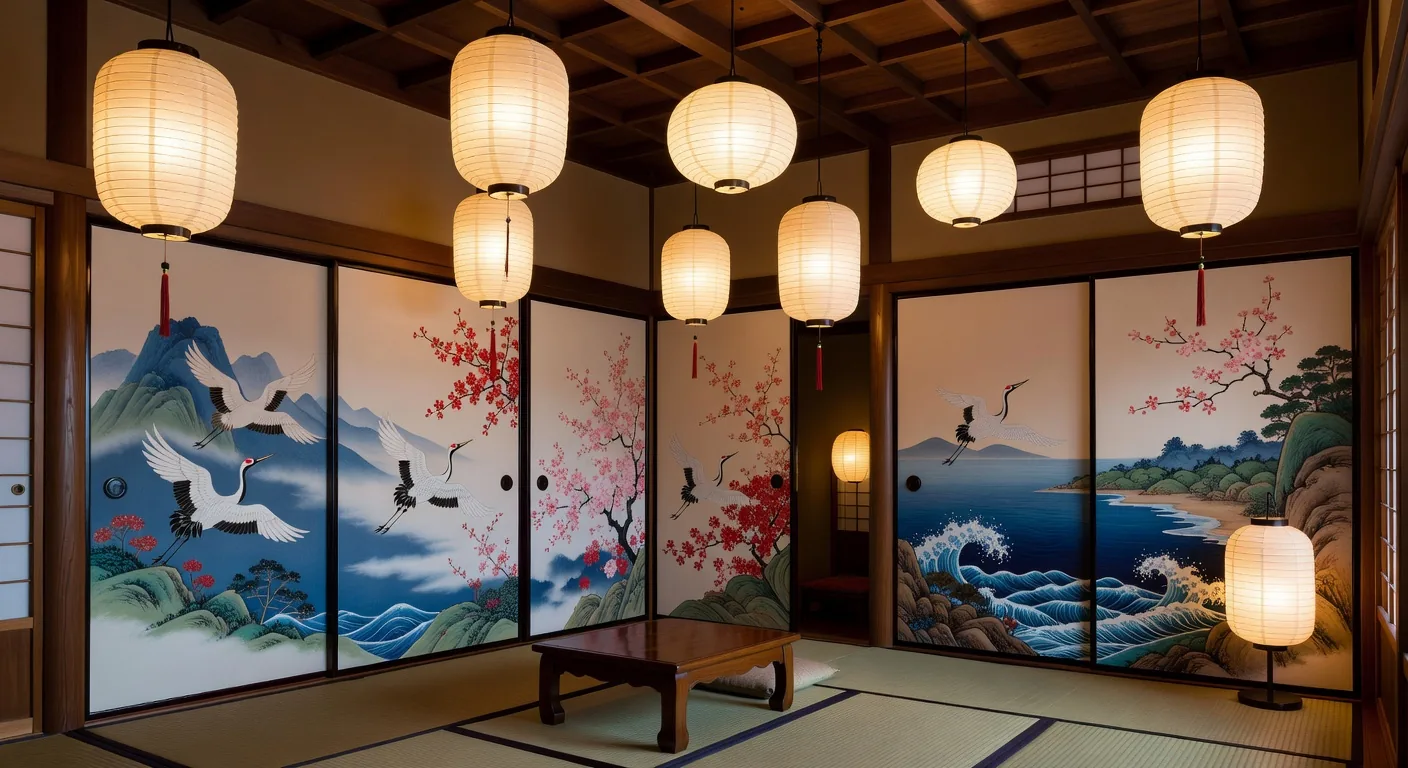
Authentic restoration of traditional Japanese buildings is impossible without the craftsmen who carry embodied knowledge in their hands. This knowledge — the precise grip of a plane, the reading of timber grain, the mixing of plaster to a specific consistency — cannot be found in books. It lives in the bodies of practitioners, transferred through years of apprenticeship.
We work exclusively with craftsmen and craftswomen trained in traditional methods, many of whom are among the last practitioners of specific regional techniques. Every restoration project is also, in a sense, a knowledge-preservation project — documenting methods and materials for future generations.
Japan currently has fewer than 300 active thatching specialists (kayabuki shokunin) — down from over 5,000 in the 1970s. Without urgent apprenticeship investment, this tradition faces extinction within a generation.
The Agency for Cultural Affairs' Living National Treasure system (Ningen Kokuhō) recognises and supports master craftsmen whose skills are deemed irreplaceable national cultural assets.
Specialist Trades
Each restoration project requires a constellation of specialist craftsmen, each carrying expertise in a specific material system or building element. The project coordinator must understand all of these trades to orchestrate them effectively.
Master carpenters specialising in traditional timber frame construction and joinery. Skilled in all 500-plus joint types, structural assessment, and the repair or reproduction of carved decorative elements.
10–15 years trainingSpecialist plasterers who apply traditional multi-layer clay and lime plaster systems. Skilled in the regional colour variations and surface textures of different plastering traditions across Japan.
7–10 years trainingSpecialists in the cutting, binding, and layering of grass thatch to create watertight roofs. The most endangered craft in traditional Japanese construction, with fewer than 300 active practitioners remaining nationally.
5–8 years trainingCraftsmen specialising in the construction, repair, and paper replacement of shoji screens and fusuma panels. Masters of the precise joinery required for smooth-sliding screens and the application of washi paper without bubbles or tension.
5–7 years trainingChallenges & Solutions
Every restoration project presents unique challenges, but certain problems recur across building types and periods. Here are the most common, and how we address them.
Traditional Japanese buildings typically show decay concentrated at specific vulnerability points: column bases where timber meets stone foundations (susceptible to rising damp), roof plate connections exposed to weathering, and any timber in direct contact with infill plaster walls. Widespread surface discolouration and checking (surface cracking) are cosmetic; true structural decay must be probed and core-sampled to assess depth.
We use Japanese traditional methods of timber splicing (tsugite) to replace only the decayed sections of structural members, retaining as much original fabric as possible. Where full replacement is necessary, we source aged timber from demolition salvage to match the appearance and behaviour of the original.
Japan's seismic building codes (updated in 1981 and significantly revised after the 1995 Great Hanshin Earthquake) require structural performance that traditional buildings, built without engineering calculations, may not meet. The challenge is achieving code compliance without inserting visible steel or concrete that destroys the building's aesthetic and material integrity.
We work with structural engineers specialising in traditional buildings to insert minimal, carefully placed steel connections and concealed bracing within floor and ceiling voids. In many cases, careful repair and tightening of original timber joinery — which was originally assembled with deliberate looseness for seismic flexibility — achieves compliance with minimal intervention.
Traditional buildings require materials that are no longer in mainstream production: old-growth hinoki cypress of specific dimensions, handmade kawara tiles matching existing profiles and colour, regional clay plaster formulations, and artisan-produced washi paper of appropriate weight and translucency. Modern substitutes are almost always detectable and fail to age in the same way as authentic materials.
We maintain relationships with a network of specialist suppliers across Japan, including timber merchants holding aged stock, small-batch kawara kilns in Awaji and Sanage, and regional plasterers who formulate traditional mixtures using locally sourced clay. For irreplaceable items, we source from demolition salvage of similar buildings.
Traditional Japanese buildings were designed for oil lamp lighting, well water, and natural ventilation. Integrating the electrical wiring, water supply, drainage, and heating systems required for comfortable contemporary living without visibly damaging historic fabric is one of the most demanding aspects of residential restoration.
We route all services through floor voids, ceiling spaces, and the concealed cavities within wall systems, emerging only where strictly necessary and using period-sympathetic fixtures. Under-floor radiant heating systems work particularly well in tatami rooms, providing warmth without any visible intrusion. We avoid recessed ceiling lighting, preferring traditional andon floor lamps and wall-mounted fixtures.
Authentic restoration using traditional materials and methods costs significantly more than conventional renovation. A fully restored machiya may cost 2–4 times the equivalent floor area renovated with modern methods. Clients unfamiliar with traditional buildings sometimes misinterpret the appearance of aged materials — weathered timber, slightly irregular plaster, tatami that has faded from green to gold — as incompleteness or poor quality.
We invest substantially in client education at the outset of every project, including site visits to completed restorations. We document in writing exactly what "authentic restoration" means for each building element and why certain aesthetic qualities — the patina of aged timber, the variation in handmade tiles — are not defects but the evidence of quality and longevity. We build a long-term relationship with every client.
Whether you own a historic property in need of restoration, are seeking to purchase a traditional building, or wish to support Japan's heritage conservation community, we would love to hear from you.