A deep study of the forms, materials, and philosophies that define Japan's enduring built heritage
Roof Construction
In Japanese architecture, the roof is not merely a covering but the defining element of the building's character — its sweeping eaves, layered tiles, and elegant silhouette are the first and lasting impression of any traditional structure.
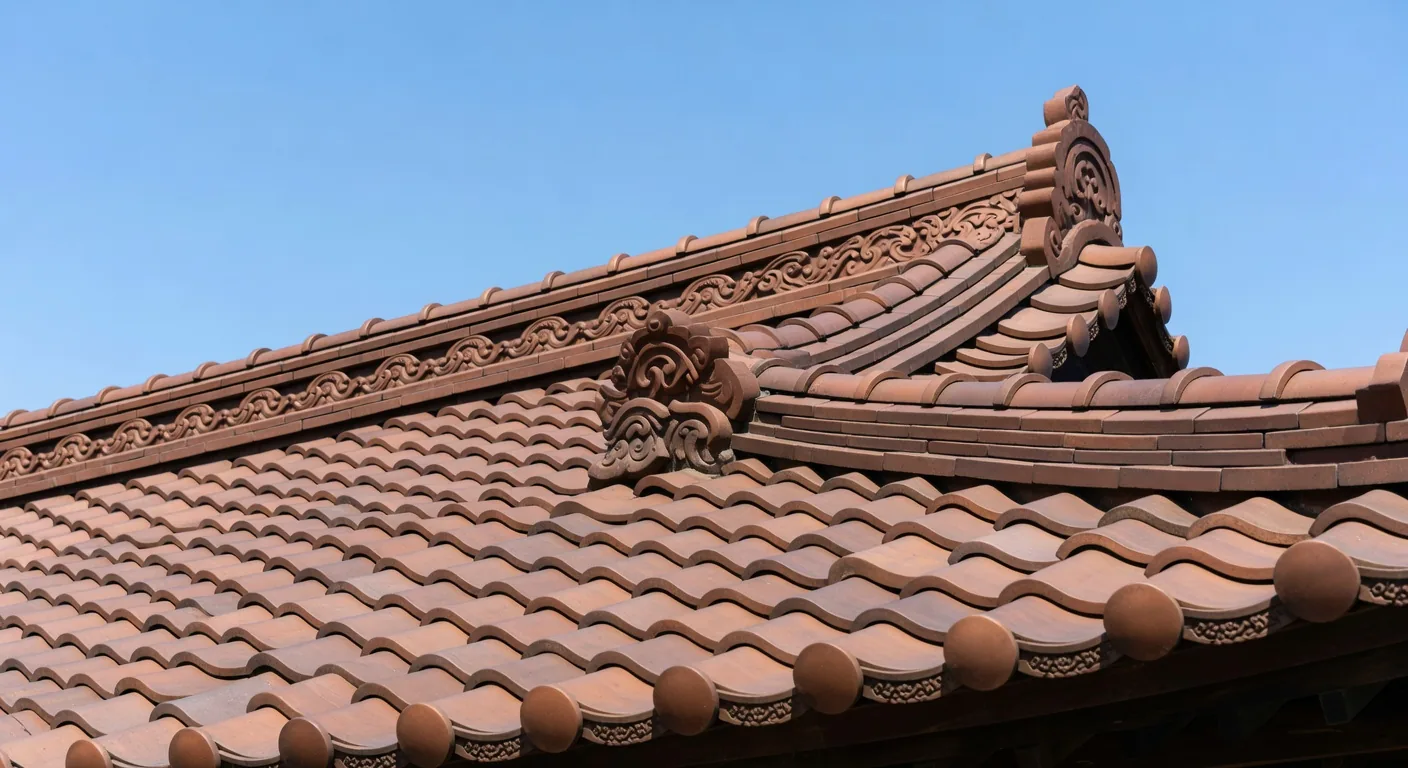
Kawara (瓦) are the iconic grey clay roof tiles that define Japan's urban and temple skylines. Introduced from Korea and China during the Asuka period (6th century), kawara have been refined over 1,400 years into a sophisticated roofing system that balances weight, drainage, and thermal regulation.
Each tile is individually shaped, fired at high temperatures, and laid in interlocking courses that create the characteristic rhythmic surface texture visible across Japan's historic districts. The subtle grey-blue tone comes from a reduction firing process that was perfected in the Edo period.
Construction Methods
Japanese traditional architecture developed three interconnected structural innovations that allowed buildings to endure earthquakes, typhoons, and centuries of use — a system so sophisticated that modern engineers still study it today.
The fundamental structural logic of Japanese architecture is the post-and-beam (kigumi) frame. Unlike Western load-bearing wall construction, the Japanese system places all structural forces within a network of wooden columns and horizontal beams, leaving walls free to be lightweight, removable, or entirely absent. This flexibility allows buildings to flex rather than crack during seismic events.
Traditional Japanese buildings are elevated above the ground on stone or timber foundation posts. This raises floors above moisture and flooding, provides ventilation beneath the floor structure, and creates a defensible threshold between outside and inside — embodied in the genkan entrance ritual. The raised floor also protects tatami from ground dampness and insulates against cold.
Because the structure is carried entirely by the post-and-beam frame, internal walls in traditional Japanese buildings are non-structural. Fusuma sliding panels, shoji screens, and removable wall sections allow rooms to be reconfigured at will — expanding for large gatherings, contracting for intimate settings. This profound spatial fluidity is unlike any Western architectural tradition.
Visual Guide
Japanese architecture developed a rich vocabulary of roof forms, each suited to particular building types, climates, and aesthetic traditions. These forms evolved over more than a millennium of refinement.
The simplest and most ancient roof form: two pitched planes meeting at a central ridge. The gabled ends are open (or latticed), providing ventilation. Common in farmhouses and vernacular minka construction.
Nara Period onwardFour pitched surfaces meeting at a central ridge and four hips. The hipped form sheds water on all sides, making it ideal for exposed sites. Strongly associated with aristocratic and religious architecture.
Heian Period onwardA compound form combining a hipped lower section with a gabled upper section. The most prestigious roof type in Japanese architecture, reserved for temples, palaces, and the grandest residences.
Asuka Period onwardA roof of densely packed grass (kaya), pampas grass, or miscanthus. Thatched roofs provide exceptional insulation in mountain climates, absorbing snow weight without collapse. Associated with minka farmhouses.
Pre-historic onward
Craftsmanship
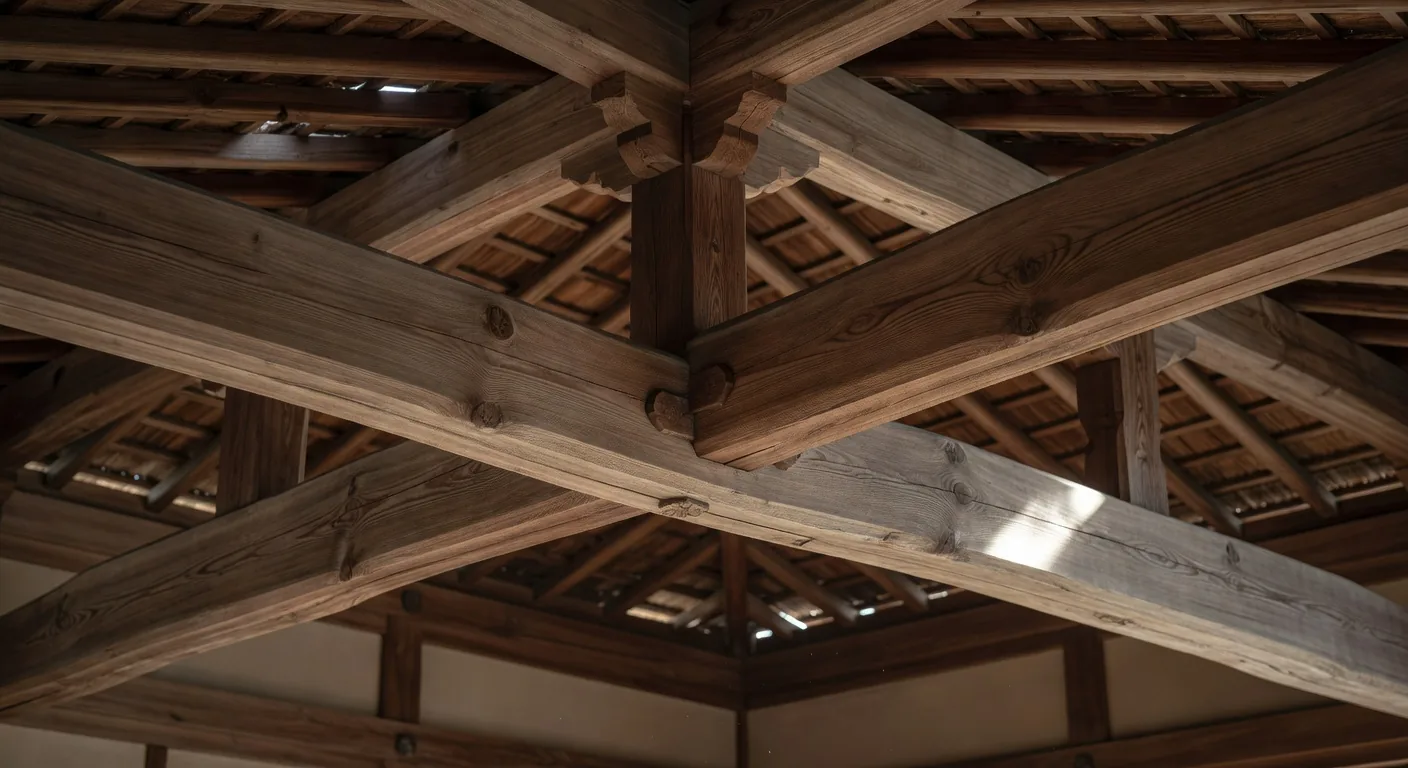
Japanese carpenters (miyadaiku) developed over 500 distinct types of wood joints, using no nails or metal fasteners. These interlocking joints flex under seismic load while maintaining structural integrity — a solution that modern engineering has only recently begun to understand and replicate.
The greatest joints can be assembled and disassembled without tools, allowing buildings to be relocated — a practice that occurred with many historic structures.
Complex interlocking corners that transfer loads at 90° angles without metal hardware.
Scarf joints for extending timber length, creating seamless structural members from multiple pieces.
Horizontal members passing through columns to brace the frame laterally against wind and seismic forces.
Layered horizontal beams that distribute roof loads across multiple columns, preventing point failure.
Natural Materials
Japanese builders sourced materials from the immediate landscape, developing a profound knowledge of local timber, clay, grass, and stone. This intimacy with natural materials is expressed in every surface of a traditional building.
Japan's most prized timber, valued for its fragrance, durability, and resistance to moisture. Used for structural posts and ceremonial interiors.
Widely available and lightweight, sugi cedar is used for boards, screens, and secondary framing. Its straight grain is ideal for shoji screen frames.
Used for screens, fences, garden elements, and structural reinforcement. Bamboo's tensile strength and flexibility make it ideal for seismic zones.
Fired clay tiles provide durable, waterproof roofing. Their thermal mass moderates interior temperature across Japan's extreme seasonal climate.
Handmade Japanese paper stretched over wooden frames to create translucent shoji screens that diffuse light softly throughout interiors.
Woven rush (igusa) over compressed rice straw creates the resilient, fragrant tatami mat surface — a defining feature of Japanese interior life.
Aesthetic Theory
Japanese architecture is guided by philosophical concepts that shape spatial experience as profoundly as structural considerations. These principles create an architecture of mood, time, and contemplation.
The conscious use of empty space as an active design element. A void is never merely nothing — it is the space in which perception, atmosphere, and meaning reside. Ma governs the pauses between columns, rooms, and elements.
The profound acceptance that impermanence, incompleteness, and imperfection carry their own beauty. Aged timber, weathered plaster, and irregular stones are prized above perfect uniformity and polish.
A sensitivity to impermanence and the bittersweet quality of transient beauty. Architecture expresses this through materials that age visibly, seasonal garden views, and spaces designed for contemplating change.
The pursuit of the natural in all forms — not wildness but the organic rightness of things in their proper place. Buildings should feel grown, not built; their materials should speak of the landscape from which they came.
Questions & Answers
Common questions about traditional Japanese architectural practice, history, and preservation.