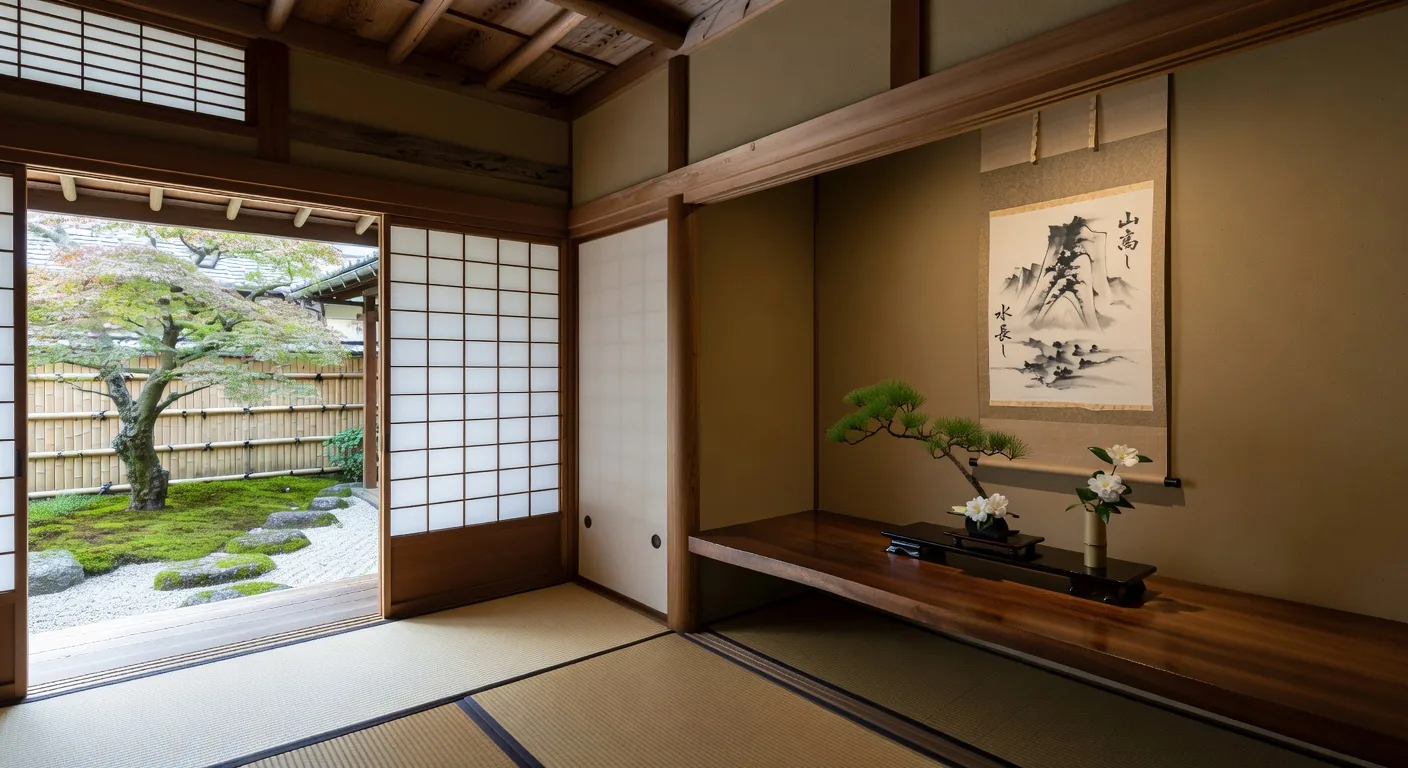
Overview
The buke-yashiki (武家屋敷) — samurai estate — represents one of the most architecturally and culturally rich building types in Japanese history. These residences, ranging from modest quarters for foot soldiers to vast complexes housing the domain lords of Japan's most powerful clans, embodied the social order of feudal Japan in every timber, gate, and stone lantern.
Unlike commoners' dwellings, which evolved organically from agricultural necessity, samurai residences were subject to strict regulations. Under the Tokugawa shogunate, the size of a samurai's residence, the height of its gate, and even the materials permitted for its walls were prescribed by rank — architecture as explicit social hierarchy made visible.
Yet within these hierarchical constraints, extraordinary refinement flourished. The samurai class were among the most significant patrons of the arts in Japanese history, and their residences reflected this: ink paintings on sliding screens, meticulously composed gardens, and study rooms furnished with the precise asymmetric display of scholar's objects that characterised the Shoin-zukuri style.
Social Hierarchy
The domain lords (daimyo) maintained vast urban estates in castle towns and were required to maintain secondary residences in Edo under the sankin-kotai alternate attendance system. These complexes encompassed multiple buildings, large formal gardens, guest quarters, retainer barracks, and sophisticated defensive features including earthen walls and defensive gates.
Retainers of middle rank — holding administrative or military positions within a domain — lived in well-appointed but more modest compounds typically enclosed by earthen or wooden walls. Their residences commonly included a formal reception room, living quarters, a small garden, a storehouse, and stabling for horses. Many of the best-preserved examples in cities like Kanazawa and Hagi date from this class.
Foot soldiers (ashigaru) and lower-ranking retainers occupied modest single-storey dwellings, often arranged in terraced rows near castle perimeters — a vernacular counterpart to the grand estates of their superiors. Despite their modest scale, these buildings retain the fundamental spatial logic of samurai architecture: a clear separation between public reception space and private family quarters.
Architectural Style
The shoin-zukuri style — named for the window-desk study alcove that is its most characteristic element — represents the aesthetic zenith of samurai residential architecture. Developed during the Muromachi period and refined through the Edo era, it established conventions of spatial organisation, interior furnishing, and formal reception that shaped Japanese domestic aesthetics for centuries.
Unlike earlier aristocratic shinden-zukuri architecture with its open, interconnected halls, shoin-zukuri divides space into discrete rooms with specific functions, linked by sliding screens and defined by tokonoma alcoves, staggered shelves, and decorative transoms.
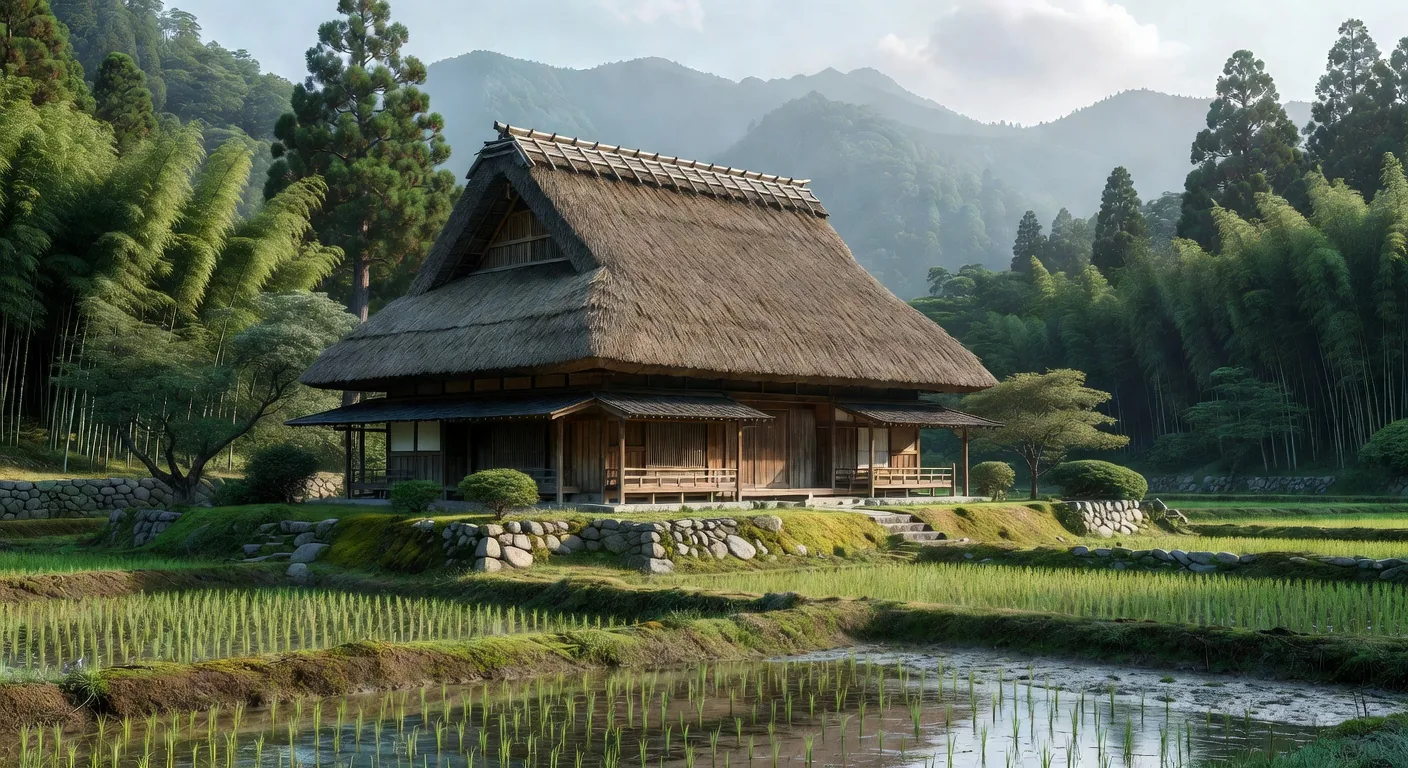
Shoin Alcove: The window-desk recess from which the style takes its name — a built-in study surface beneath a paper-paned window, used for reading, writing, and receiving guests.
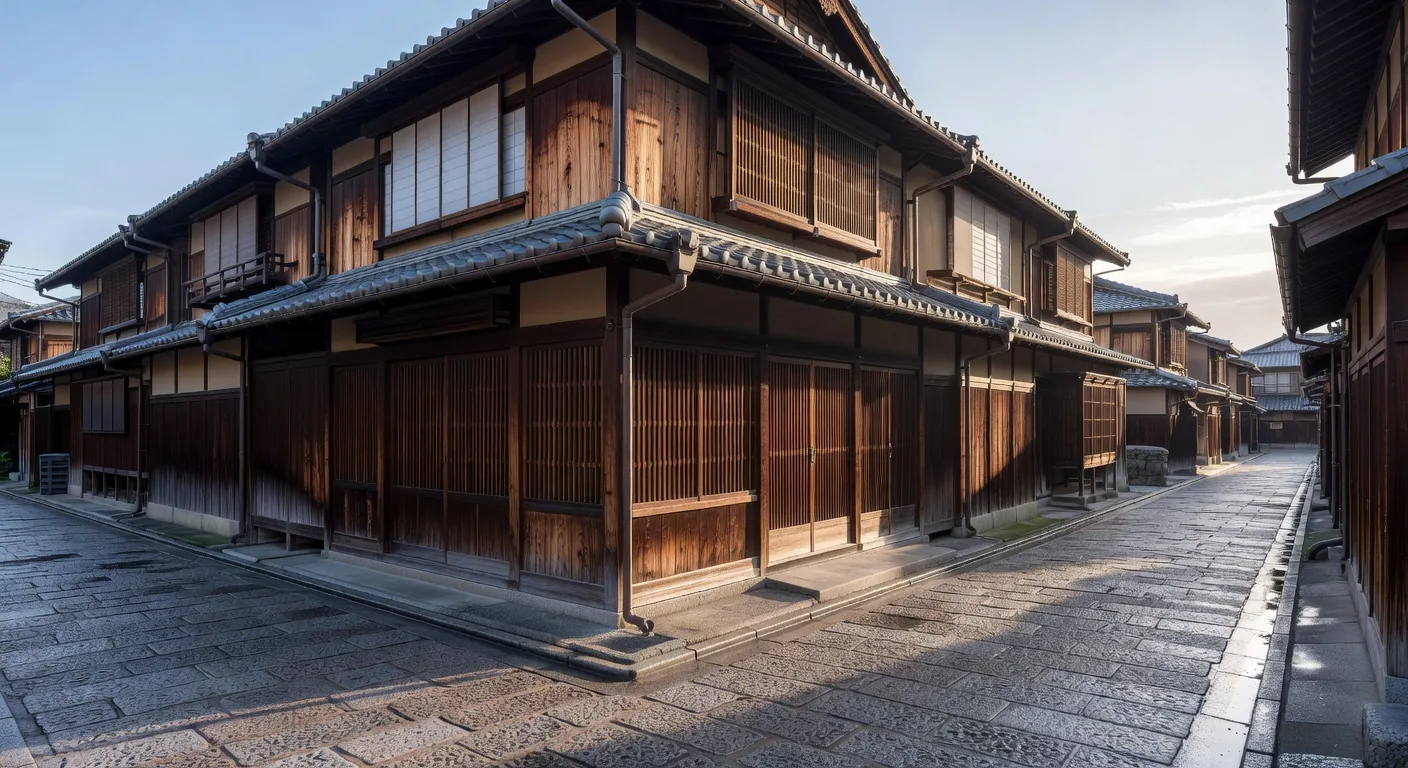
Tokonoma: The decorative alcove displaying a hanging scroll and arrangement of objects — the focal point of any formal room and the single most important element in the aesthetic hierarchy of the interior.
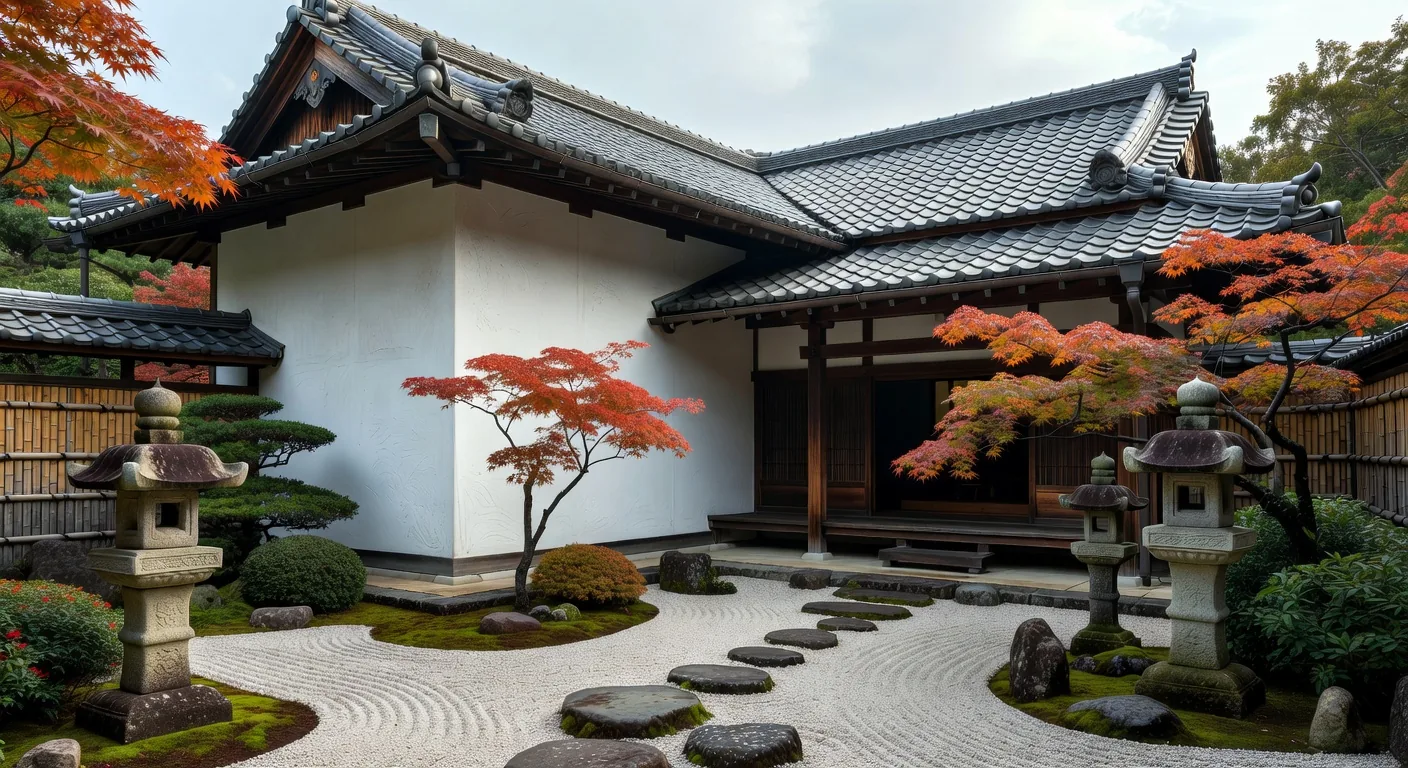
Chigai-dana: Asymmetric staggered shelves beside the tokonoma, used for displaying objects of refined taste — lacquerware, ceramics, and scholarly paraphernalia.
Architecture
The formal entrance vestibule where the transition from exterior to interior was ritually managed. In samurai residences, the size and decoration of the genkan announced the owner's rank and the formality expected of visitors removing their footwear.
The window-desk alcove defining the shoin-zukuri style — a built-in reading and writing surface positioned to receive north or east light, emphasising the scholarly character expected of a cultured warrior-administrator.
The spiritual and aesthetic heart of the formal room. A slightly raised platform displaying a hanging scroll (kakejiku) and a single object of seasonal beauty, changed regularly to mark the passage of time and demonstrate the owner's aesthetic discernment.
The designed garden was inseparable from the samurai residence, visible from the formal reception room and maintained as a three-dimensional extension of the interior's aesthetic programme. Water, rocks, and carefully shaped trees created a composed landscape of symbolic depth.
From the monumental nagayamon (long-house gate with retainer quarters above) of high-ranking estates to the modest hip-roofed gates of lesser samurai, the gate was the most legible marker of status — its scale, materials, and design prescribed by domain regulations according to rank.
Fireproof earthen-walled storehouses (dozokura) with thick plastered walls and heavy timber doors protected the family's most precious possessions — weapons, documents, heirlooms, and valuables — from the fires that periodically swept Edo-period towns.
Preserved Heritage
Ishikawa Prefecture
One of Japan's best-preserved samurai districts, Nagamachi retains its original earthen walls (dobei), narrow winding lanes, and several complete estate complexes including the Nomura-ke residence, open to visitors. The district escaped both wartime bombing and the post-war development pressure that destroyed similar areas elsewhere.
Open to VisitorsYamaguchi Prefecture
Hagi, former castle town of the Mori clan, preserves an extraordinary concentration of samurai residences across multiple social ranks. The survival of both high-ranking estates and modest ashigaru quarters makes Hagi uniquely valuable for understanding the full social spectrum of samurai residential architecture.
UNESCO NominationFukushima Prefecture
While primarily a post town rather than a castle town, Ouchi-juku's complete preservation of a samurai-period streetscape — including the residences of local administrators — provides a remarkably intact example of how architectural rank gradations were expressed across an entire planned settlement.
Nationally DesignatedHistorical Context
Muromachi Period — 1336 to 1573
The foundational conventions of samurai residential architecture emerge from the temples and residences of the Zen-influenced warrior elite. The tokonoma, shoin alcove, and staggered shelves are codified during this era, establishing an aesthetic vocabulary that will define samurai domestic space for four centuries.
Azuchi-Momoyama Period — 1568 to 1600
The warlords of the unification period — Nobunaga, Hideyoshi, Ieyasu — commission residences of unprecedented scale and decorative ambition. Gold leaf screens, elaborate painted ceilings, and monumental gate complexes signal the arrival of a new political order through architecture. The great castle-palace complexes of this era, though largely lost, set the template for Edo-period aristocratic architecture.
Edo Period — 1603 to 1868
Under Tokugawa rule, strict sumptuary laws regulate samurai residential architecture by rank. The long peace allows accumulated wealth to flow into refinement rather than fortification — gardens become increasingly sophisticated, interior decoration reaches extraordinary levels, and the tea house becomes integral to the samurai compound. This is the era from which most surviving examples date.
Meiji Period — 1868 to 1912
The abolition of the samurai class in the early Meiji period triggers the destruction or repurposing of vast numbers of buke-yashiki. Government buildings, schools, and barracks replace the estates of former lords. Those that survive do so through conversion to other uses, family retention, or — in a handful of remarkable cases — through active preservation efforts that began earlier than is often recognised.