Interior Spaces

Inside the Japanese Traditional Home

A room-by-room journey through the spatial poetry, materials, and light of Japan's living heritage

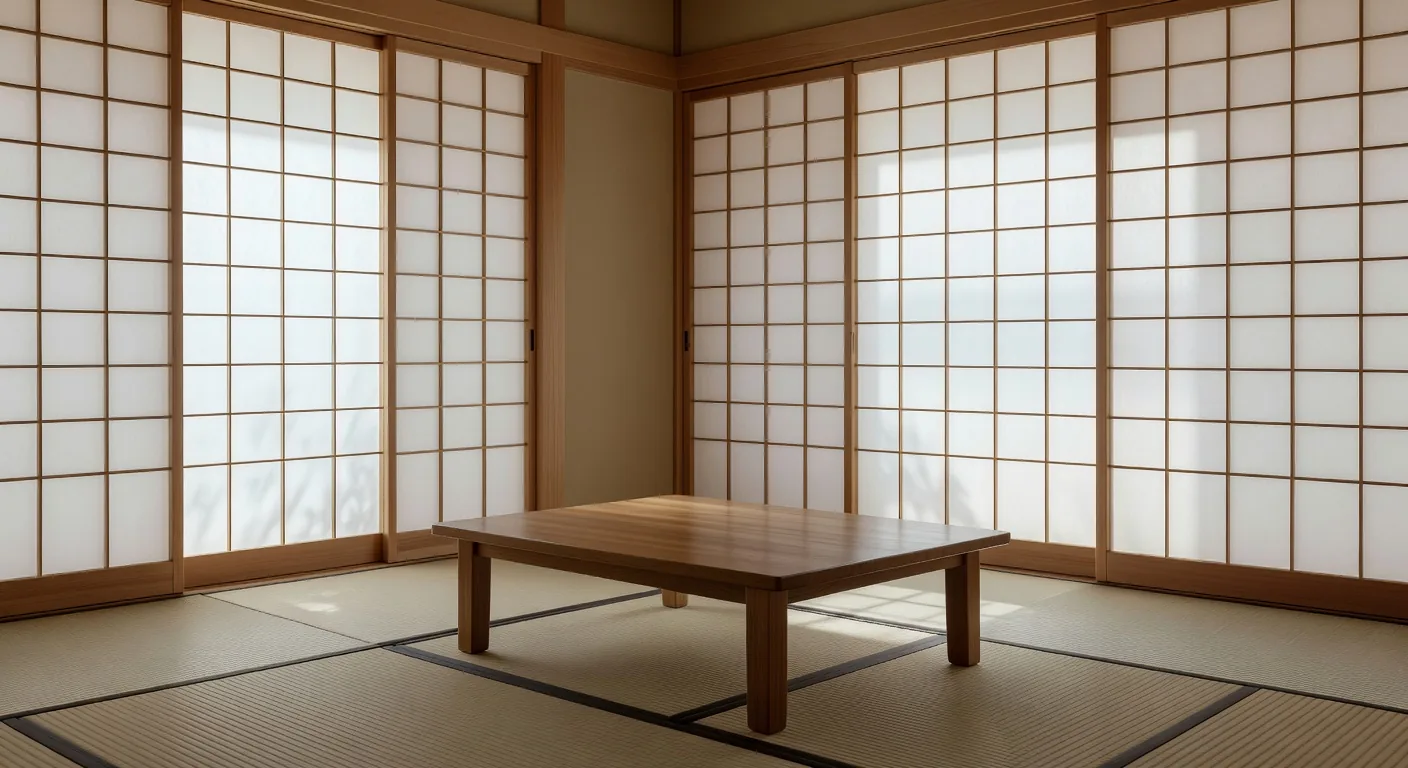
Shoji paper screen interior room with diffused natural light

Shoji — The Art of Diffused Light

The shoji screen is perhaps the most recognisable element of Japanese interior design — and the most misunderstood. It is not simply a room divider or a window covering. It is a light transformation device, converting the harsh brightness of direct sunlight into a luminous, even glow that suffuses the interior with warmth without glare.

The washi paper stretched over the shoji's wooden lattice grid is translucent, not transparent. It is thick enough to obscure views while remaining thin enough to transmit light — a perfect balance found through centuries of papermaking refinement. The lattice pattern itself varies by region, period, and function, ranging from simple rectilinear grids to elaborate geometric compositions.

  • Material Washi (Japanese handmade paper) over hinoki or sugi wood lattice
  • Function Light diffusion, privacy, room division, insulation
  • Dimensions Standard module 180cm × 90cm, matching tatami proportion
  • Maintenance Paper replaced annually, traditionally at New Year
  • Variants Yukimi-shoji (snow-viewing), Muso-shoji (double-layer)
  • Pattern Koshi-gumi (standard grid) to elaborate kumiko woodwork
Room by Room Guide

The traditional Japanese home is experienced as a procession through carefully calibrated spaces, each with its own atmosphere, ritual function, and relationship to the garden beyond.

Genkan entrance hall of a traditional Japanese home
Room 01

Genkan

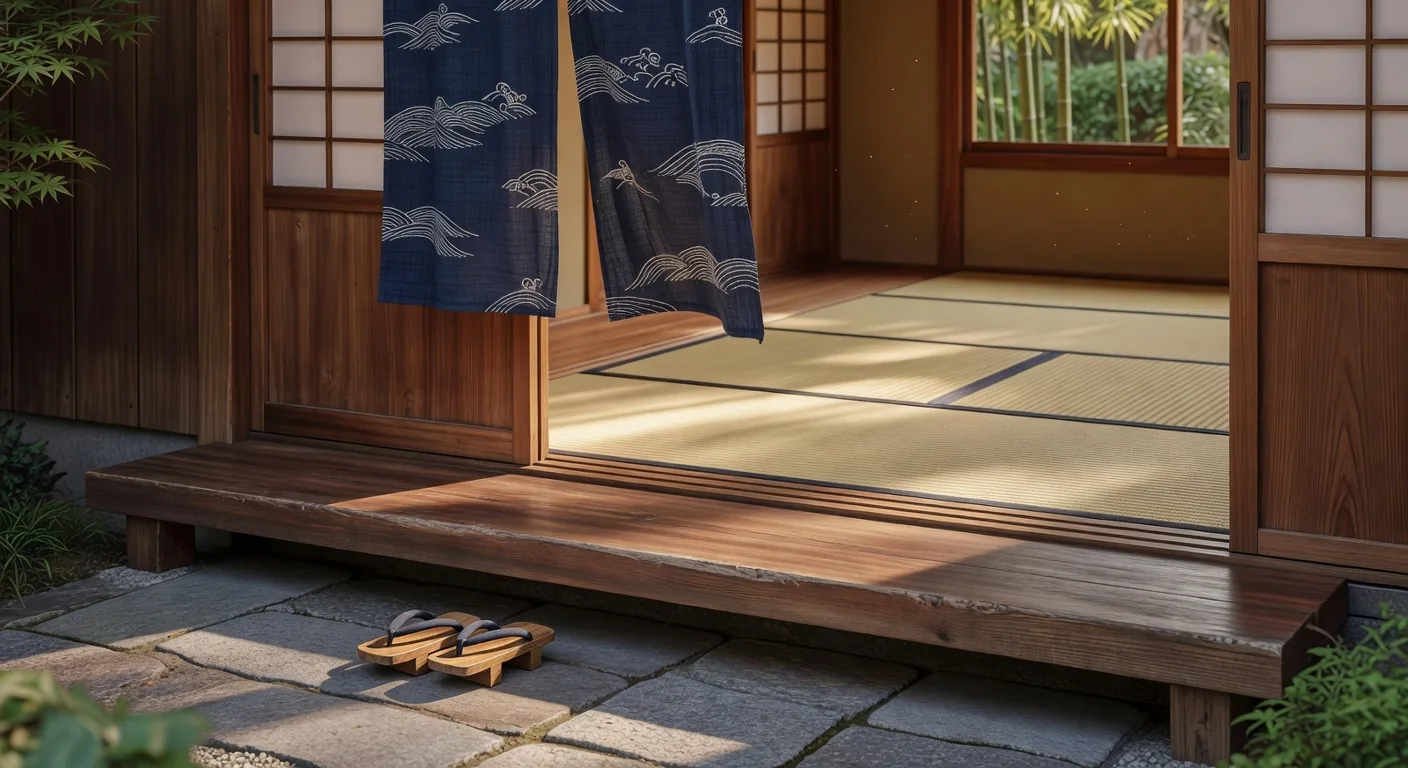
The genkan is the threshold between the public world and the private home. A step up from street level, it is where shoes are removed, guests are received, and the social rituals of arrival and departure are performed. Its carefully chosen stone floor (tataki) and single decorative object establish the home's aesthetic identity before anything else is seen.

Explore the genkan →
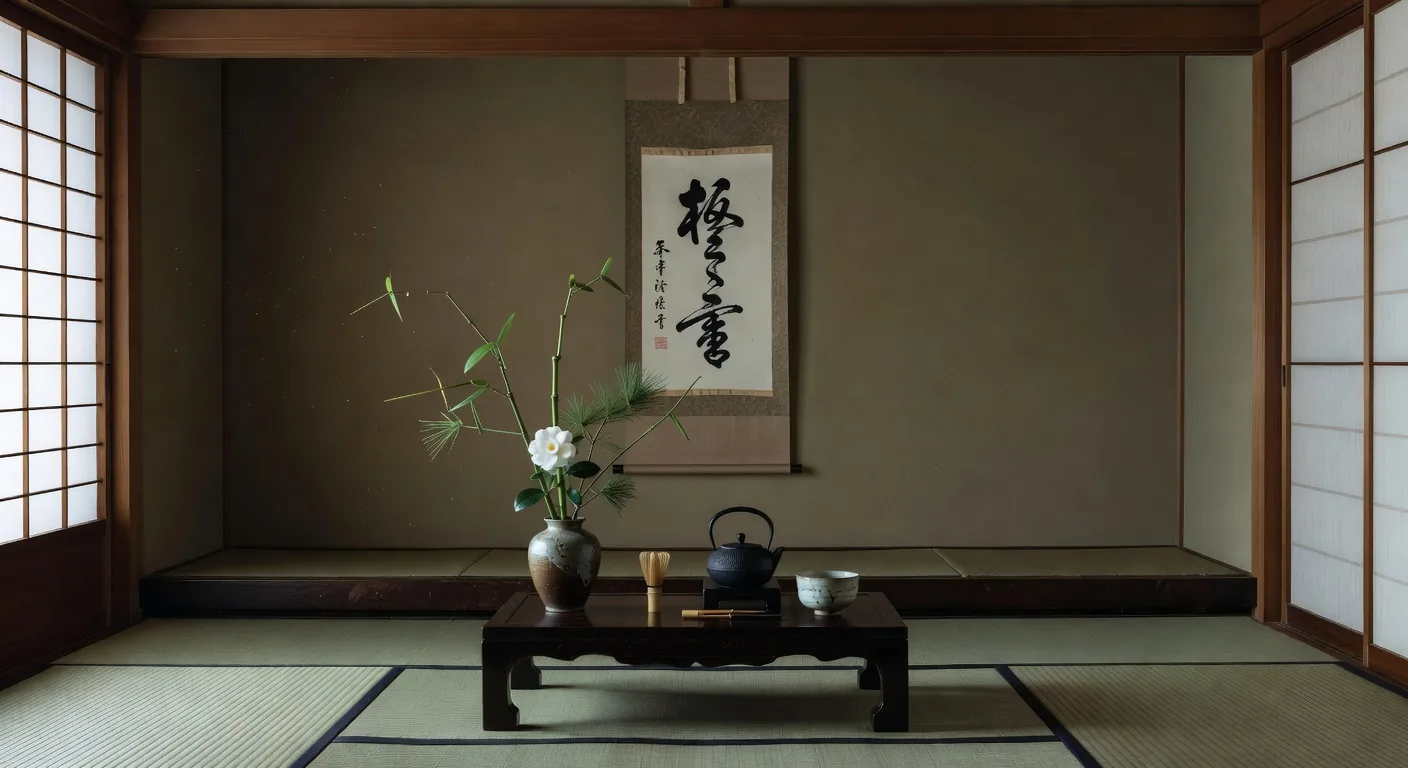
Tatami room with ikebana flower arrangement in tokonoma
Room 02

Zashiki (Tatami Room)

The tatami room is the ceremonial heart of the Japanese home — a multi-functional space that serves as reception room, dining room, and bedroom depending on the time of day and occasion. The room's geometry is defined entirely by the tatami mat grid. The tokonoma alcove houses seasonal flowers and a hanging scroll that together express the host's aesthetic sensibility and respect for the guest.

Explore tatami rooms →
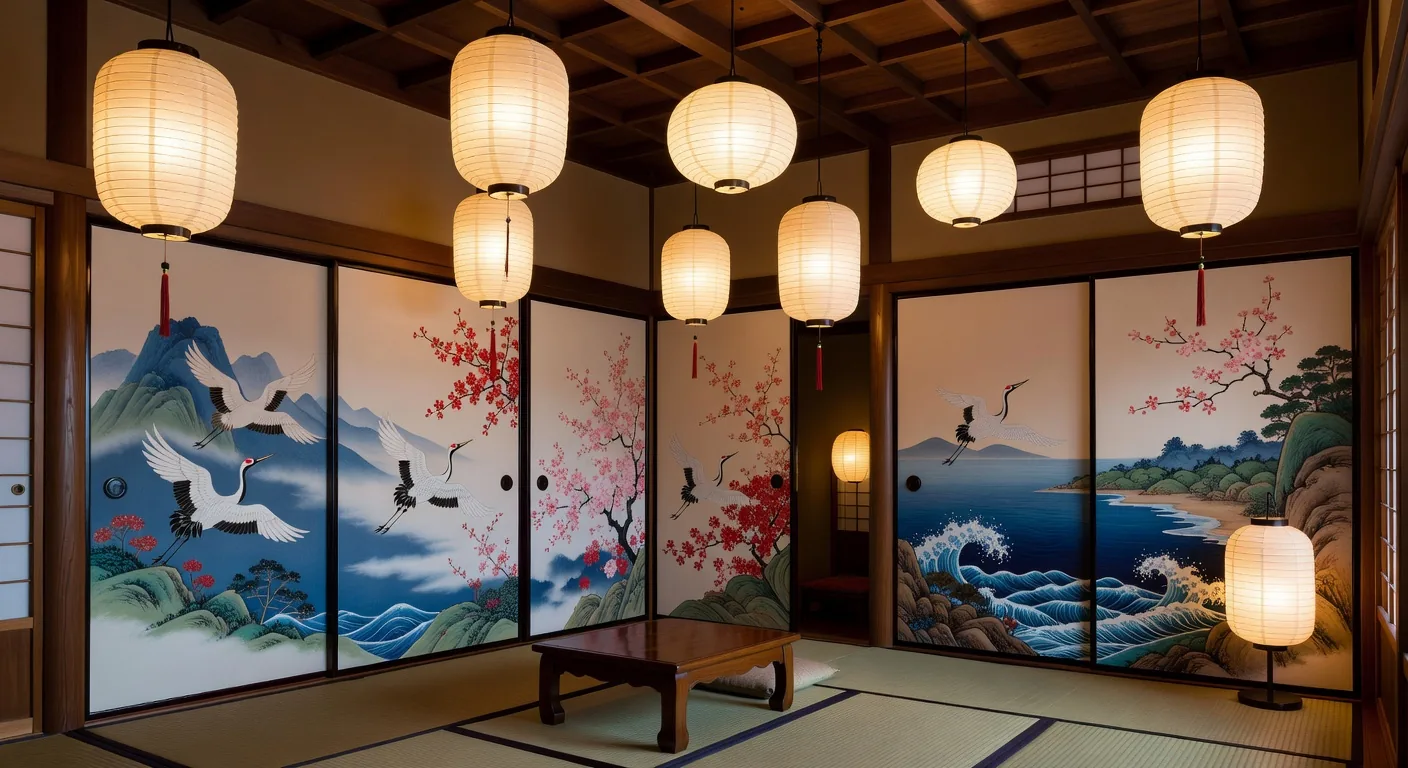
Paper lanterns and fusuma sliding door panels with painted decoration
Room 03

Fusuma-shitsu

Fusuma are opaque sliding panels that define and divide interior space in traditional Japanese homes. Unlike shoji, fusuma are fully opaque and traditionally decorated with paintings by skilled artists — landscapes, birds, flowers, or abstract geometric patterns applied to gold-leaf grounds. They are architectural canvases that transform as they open and close, reconfiguring the spatial experience of the home continuously.

Explore fusuma art →
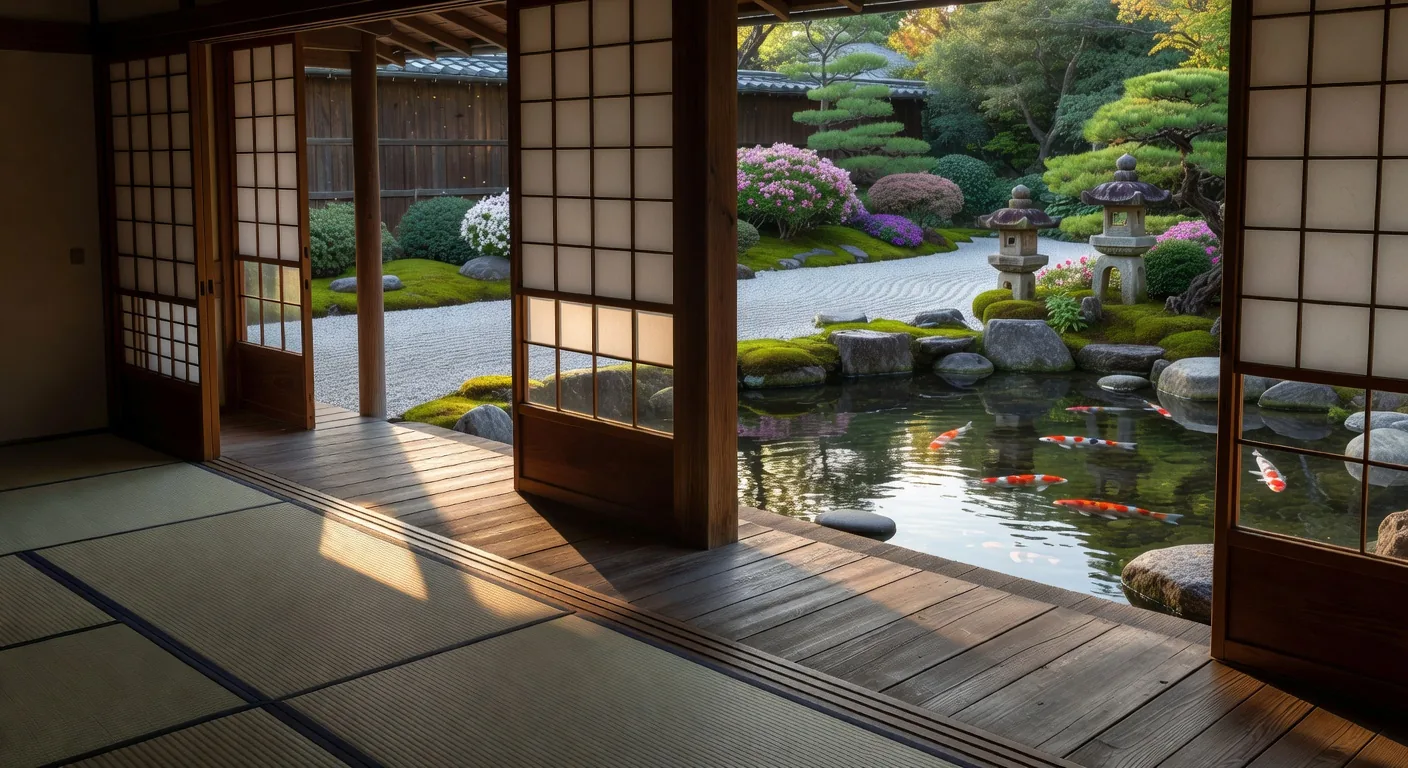
Engawa veranda overlooking traditional Japanese garden
Room 04

Engawa

The engawa is the transitional space between the interior of the house and the garden — a veranda or corridor that is simultaneously inside and outside. In summer, shoji panels open fully to merge engawa with the interior and connect the home to the garden. In winter, the engawa acts as a thermal buffer, trapping warmth. It is a space for contemplation, informal gathering, and the simple pleasure of watching the garden change with the seasons.

Explore gardens →

Materials & Craftsmanship

Every surface of a traditional Japanese interior is the product of specialised craft traditions, many of which have been practised continuously for over a thousand years. The beauty of these spaces is inseparable from the knowledge embedded in their making.

🪵

Woodwork

From structural frames to decorative ranma transoms, Japanese woodwork achieves extraordinary precision through hand tools and traditional joinery techniques that require decades to master.

🏺

Plaster Walls

Plasterers (sakanya) apply multiple layers of clay, sand, and lime to create the nuanced earth-toned wall surfaces characteristic of traditional interiors. Each layer is burnished by hand.

🟩

Tatami Weaving

Rush (igusa) grass is harvested, dried, and woven into the characteristic herringbone surface of tatami mats, which are then bound with decorative fabric borders (tatami-beri) specific to the room's status.

📄

Washi Making

Handmade Japanese paper for shoji screens is produced using kozo (mulberry) fibres beaten and formed sheet by sheet. UNESCO-recognised craft producing paper of exceptional translucency and durability.

🎨

Fusuma Painting

Master artists of the Kano, Tosa, and Rinpa schools painted monumental compositions on fusuma panels, creating room-scale works that changed the atmosphere of spaces through imagery.

🏮

Lantern Craft

Traditional paper lanterns stretched over bamboo frames diffuse candlelight and electric light with equal warmth, creating pools of amber illumination that animate interior spaces at night.

Color & Light in Natural Materials

The traditional Japanese interior is a study in the near-absence of colour. Earth walls in tones of clay and sand, unpainted timber in grey-brown and honey gold, tatami in fresh yellow-green fading to warm straw — these are the chromatic boundaries within which Japanese interior aesthetics operates.

This restraint is not poverty of imagination but a sophisticated understanding that natural materials carry their own complex, shifting colour. The same hinoki post shifts from pale gold in morning light to deep amber at dusk; tatami changes from green to gold as it ages over months and years. The interior is never static.

Artificial colour appears only in carefully chosen objects: the deep indigo of a textile, the red lacquer of a food tray, the occasional painted screen. These controlled interventions of colour are experienced as events — heightened by the neutral ground against which they appear.

Principles of Interior Light

  • In Praise of Shadows

    As Tanizaki Jun'ichiro observed, Japanese beauty is found not in bright illumination but in the play of deep shadow — the spaces under the eaves, the recesses of the tokonoma, the darkness behind fusuma panels.

  • North-Facing Tokonoma

    The tokonoma alcove is traditionally lit by indirect northern light, which is cool, even, and non-directional — ideal for displaying hanging scrolls without the glare that would distort their calligraphic subtleties.

  • The Shoji as Filter

    Shoji screens act as a light-processing system, converting the harsh contrast of direct sunlight into a soft, luminous glow that suffuses the entire room with warm, shadowless illumination.

  • Lacquer and Reflection

    Black lacquered surfaces — floor boards, furniture, and trays — reflect light from below, creating a luminous depth that seems to float objects in pools of amber light.

Seasonal Interior Arrangements

The traditional Japanese home is not a fixed environment but a living space that responds to and reflects the changing seasons. Interiors are deliberately transformed throughout the year.

Summer —涼 (Ryō)

Summer arrangements prioritise the feeling of coolness above actual temperature. The Japanese concept of ryō describes the aesthetic sensation of cool — achieved through visual and material means rather than mechanical cooling alone.

In summer, the home opens: shoji panels are replaced with reed screens (sudare) or bamboo blinds that filter light while allowing breezes to pass. The fusuma between rooms and garden are removed entirely, blurring interior and exterior.

  • Reed sudare blinds replace paper shoji to admit breezes
  • Linen and cotton textiles replace heavier winter fabrics
  • Glazed ceramic vessels with water and floating leaves for the tokonoma
  • Seasonal flowers: morning glory, lotus, and iris arrangements
  • Lacquered fan racks and glass wind chimes (furin) placed at eaves
🎋

Bamboo Screens (Sudare)

Woven bamboo or reed blinds hung from eave rails, creating filtered shade and allowing natural air circulation through interiors.

🌸

Tokonoma Summer Display

A single iris or morning glory stem in a rough ceramic vessel; the scroll changed to a landscape suggesting cool mountains or rushing water.

🔔

Furin Wind Chimes

Glass or iron bells hung from the eaves, their sound signalling the presence of even the faintest breeze and creating a sonic experience of cool air.

Winter — 温 (On)

Winter interiors retreat inward, closing screens and adding layers of textile warmth. The irori sunken hearth or the portable kotatsu table become the social and thermal centre of domestic life, drawing family members together around shared heat.

Winter also brings the most visually dramatic tatami room displays: the tokonoma scroll depicting snow or bare branches, the single camellia in a plain ceramic vase, the iron kettle singing on the hearth.

  • Additional shoji layers added; fusuma closed to retain warmth
  • Kotatsu heated table placed at room centre for family gathering
  • Thick silk and wool cushions (zabuton) replace summer linen
  • Tokonoma: camellia or plum blossom as first sign of approaching spring
  • Iron kettle (tetsubin) on portable brazier for continuous hot water
🔥

Irori Hearth

The sunken central hearth, when present, becomes the winter focal point — used for heating, cooking, and social gathering around its constant, warming fire.

🌸

Camellia (Tsubaki) Display

A single camellia bloom in a rough-glazed vase placed in the tokonoma — its perfect form against the dark scroll-hung wall a quintessential Japanese winter still life.

🫖

Tetsubin Iron Kettle

The iron kettle's gentle singing on the brazier provides both warmth and acoustic atmosphere — the sound itself considered a component of the winter interior experience.

The Rhythm of Seasonal Change

The transformation of a traditional Japanese interior across the four seasons is itself considered an art form. The household head or mistress was expected to demonstrate aesthetic sensitivity through the timing and execution of seasonal changes — a skill cultivated over years.

The changes are not wholesale: rather, carefully chosen elements shift to mark the turning of the seasons, each change creating a moment of contemplation and heightened awareness of time's passage.

  • Spring: Cherry blossom scroll; new tatami laid; light cottons introduced
  • Early Summer: Shoji replaced with reed screens; ceramic water vessels
  • Autumn: Maple leaf arrangements; deep lacquered surfaces foregrounded
  • Winter: Hearth opened; camellia displayed; heavy textiles introduced
  • The tokonoma changes with each seasonal node (setsubun, hanami, etc.)
  • Fragrance also changes: pine resin in winter, fresh water in summer
🌸

Spring Renewal

New tatami laid (its fresh green scent marks the season), cherry blossom scroll displayed, light silk replaced — the home itself celebrating rebirth.

🍂

Autumn Depth

Maple leaves arranged in a tall vase, lacquered surfaces brought forward in the home's object arrangement, heavier textiles quietly introduced.

❄️

Winter Stillness

The home contracts, screens close, and the interior becomes introspective — the Japanese winter interior is perhaps the most powerfully contemplative seasonal arrangement.

Traditional Furniture & Objects

The traditional Japanese home contained remarkably little furniture compared to Western interiors. This restraint was not poverty but philosophy: each object was chosen carefully, and its absence was as considered as its presence.

🗄️

Tansu

Stepped or stacked wooden storage chests with iron fittings, providing flexible, beautiful storage in a low-furniture environment.

📚

Shodana

Asymmetric shelving units in the tokonoma area, designed for displaying ceramics, scrolls, and literary objects at varying heights.

🪑

Zabuton

Silk or cotton floor cushions for seated guests. Their placement and quality signal the status of a guest within the household's hierarchy of welcome.

🕯️

Andon

A wooden and washi paper floor lantern housing a candle or oil lamp, casting a warm, intimate circle of light at tatami level.

🪣

Mizusashi

Ceramic or lacquered jar for holding fresh water, placed in the tokonoma or at the tea hearth — functional object elevated to art.

📜

Kakejiku

The centrepiece of the tokonoma display — a painted or calligraphic scroll that is changed seasonally to mark the passage of time and honour guests.