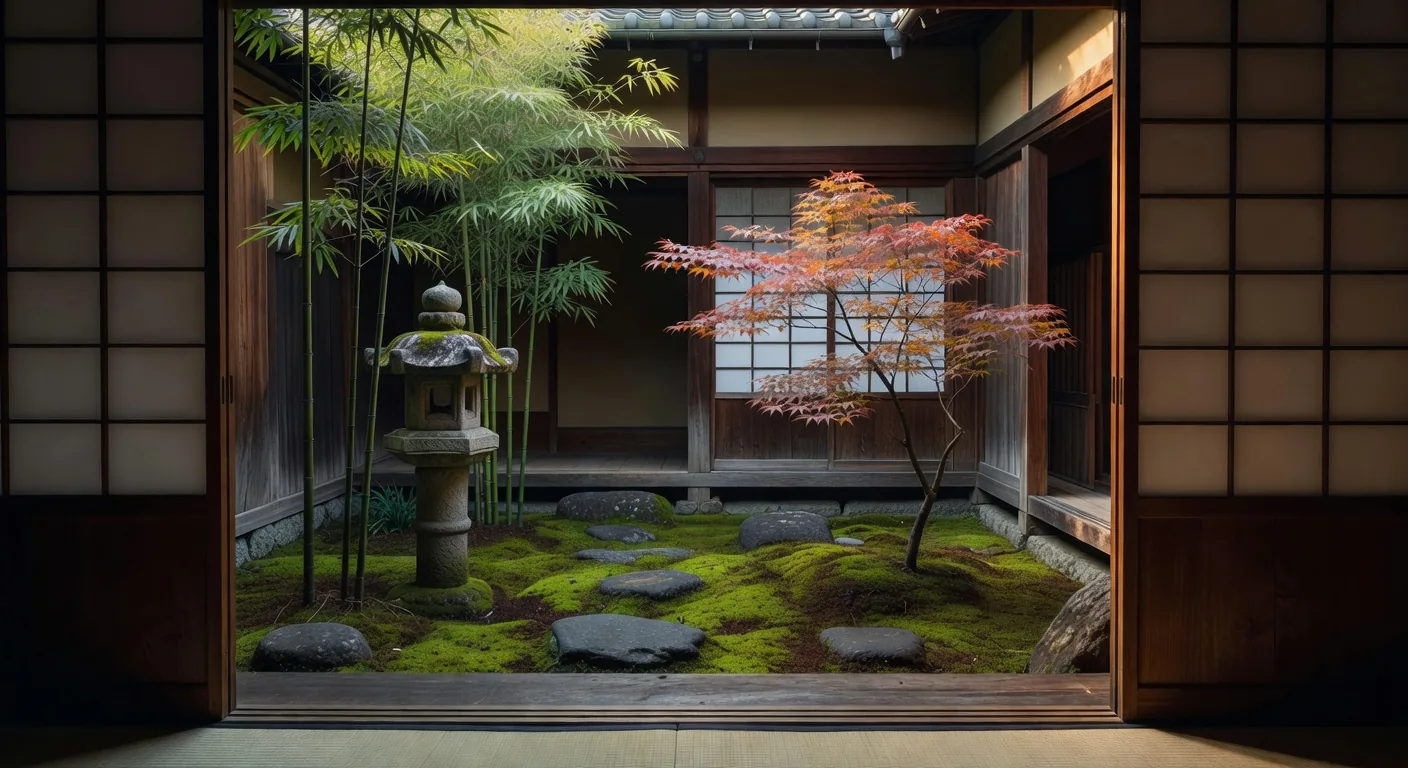
In Japanese tradition, the garden is not ornament but structure — an extension of the home's spatial and philosophical order into the natural world
Introduction
The Japanese garden is not separate from the house — it is an integral part of a unified spatial composition. From the earliest shinden-zukuri aristocratic complexes to the intimate tsubo-niwa courtyard of a Kyoto townhouse, the garden has always been understood as an outdoor room: shaped, framed, and experienced as deliberately as any interior space.
The relationship between building and garden in Japanese architecture is one of mutual definition. The garden frames views through shoji screens and engawa verandas; the building in turn provides the elevated vantage point from which the garden is observed. Neither is complete without the other.
Japanese garden design draws from three primary sources: Chinese cosmological traditions, Zen Buddhist aesthetic principles, and an indigenous Shinto reverence for natural forms — rocks, water, moss, and ancient trees understood as dwelling places of spirits (kami).
"The garden is a compression of the universe — mountains, seas, islands, and the sky — contained within whatever space the designer has at their disposal, however small."
Typology
Japanese garden culture has developed over fifteen centuries, producing distinct garden types suited to different settings, functions, and aesthetic traditions. Each type embodies a different relationship between human intention and natural form.
The most abstract of Japanese garden forms: raked gravel or sand representing water, rocks representing mountains or islands, and minimal planting. Associated with Zen monasteries, karesansui gardens invite prolonged contemplation. The Ryoan-ji rock garden in Kyoto is the supreme example.
Meditation Zen Muromachi eraThe smallest garden type, developed within the narrow lots of Kyoto machiya townhouses. A tsubo is traditionally 3.3m² — one tatami mat — and the tsubo-niwa creates maximum visual complexity and seasonal interest within this extreme constraint through layers of moss, stone, bamboo, and light.
Urban Machiya Intimate scaleA large garden designed for ambulatory experience, with a central pond, circuitous path system, and series of composed views that unfold as the visitor walks. Each turn of the path reveals a new scene. Associated with Edo-period daimyo estates and the great public gardens of Tokyo and Kanazawa.
Promenade Edo period PanoramicThe garden path established to a tea house, designed to induce mental transition from the mundane world to the spiritual space of the tea ceremony. Characterised by rough stepping stones, moss, stone water basins, and carefully pruned trees that create a sense of entering a remote mountain landscape within the city.
Tea ceremony Transitional Momoyama
Water Features
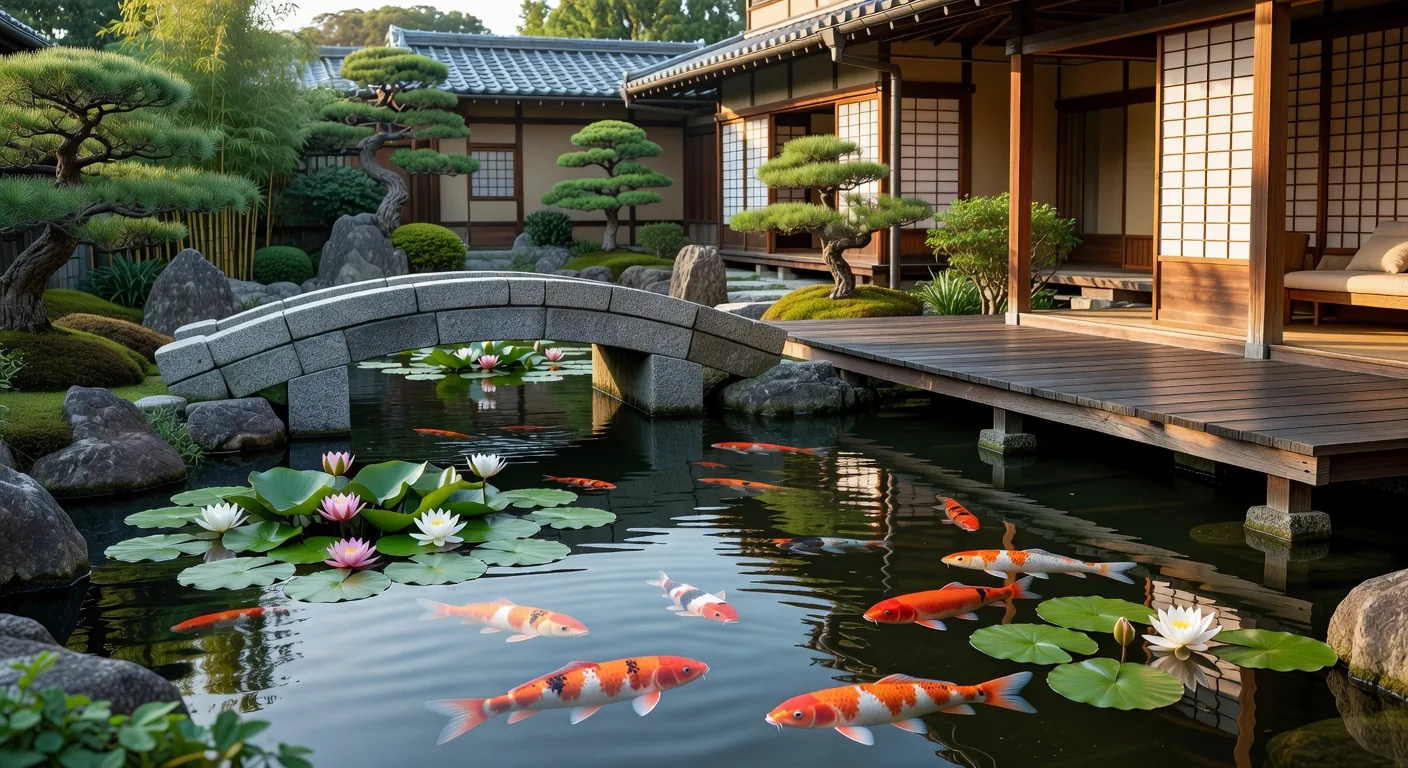
No element animates a Japanese garden quite like the koi pond. The fish — Nishikigoi, literally "brocaded carp" — are not merely ornamental additions but active participants in the garden's spatial composition, their slow movements drawing the eye across the water's surface and creating ever-changing reflections of the surrounding planting.
The pond's design is inseparable from the rest of the garden composition. Its irregular shoreline, created from carefully chosen stones, mirrors the asymmetric coastlines and lake shores of natural landscapes. Bridges of stone or arched timber cross at points that invite pause and contemplation.
Components
Japanese gardens are composed from a vocabulary of carefully chosen elements, each with symbolic meaning, seasonal role, and spatial function. Mastery lies in their combination and placement.
Cast light on evening paths; symbolic of the Buddha's illumination of darkness.
Reflecting pools animated by living fish; represent life, luck, and the flow of time.
Creates a carpet of quiet green, suggesting age and undisturbed timelessness in the garden.
Used for fences, screens, water features, and groves; symbolises flexibility and resilience.
Japanese maples provide brilliant autumn colour and delicate spring foliage; centrepieces of seasonal display.
Guide movement through the garden; their irregular spacing sets a specific pace of contemplative walking.
Low stone water basin for ritual hand washing before tea; requires a crouching posture that embodies humility.
Temporal Rhythm
The Japanese garden is designed to be experienced through time. Each season transforms the same space, revealing new aspects of the garden's composition and deepening the viewer's relationship with the natural cycle.
Aesthetic Theory
The principles governing Japanese garden design are not rules but attitudes — ways of perceiving and relating to natural form that have been cultivated through centuries of garden-making and aesthetic thought.
The empty spaces in a garden — the bare gravel of a karesansui, the open water of a pond, the gap between stones on a path — are not absences but presences. Ma is the interval that gives meaning to what surrounds it, the silence that makes the stone's voice audible.
Perfect symmetry is considered lifeless in Japanese garden aesthetics. Asymmetric composition creates visual energy, implies movement, and reflects the fundamental irregularity of natural forms. No two stones are mirrored; no two trees of equal height flank an axis. Life is uneven, and the garden celebrates this truth.
The technique of incorporating distant landscape — mountains, forests, the sky — into the garden's composition as if they were designed elements. By framing borrowed scenery through gates, hedges, or composed plantings, the garden expands beyond its physical boundaries to encompass the whole visible world.
Case Studies
Three exemplary garden designs from our portfolio, demonstrating the range of Japanese garden traditions from intimate courtyard to expansive stroll garden.
A 4.5m² inner courtyard garden restored for a renovated Edo-period machiya. Layers of Polytrichum moss, a single standing stone, and a bamboo water spout create maximum sensory complexity within extreme spatial constraints.
A new-build karesansui garden for a contemporary Japanese house in northern Kyoto. White quartz gravel raked in wave patterns surrounds five groups of granite stones sourced from the Kurama mountains. A composition for meditation and seasonal reflection.
Full restoration of a 1,200m² stroll garden surrounding a restored sukiya-style villa. The central koi pond was deepened, the stepping stone paths relaid in traditional irregular patterns, and the maple grove augmented with new specimens selected for autumn colour composition.